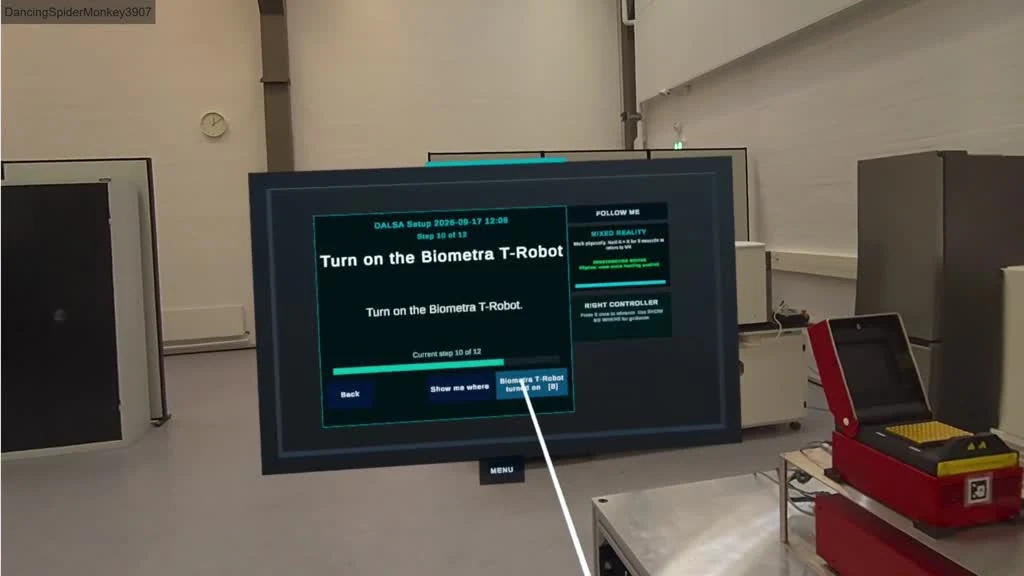
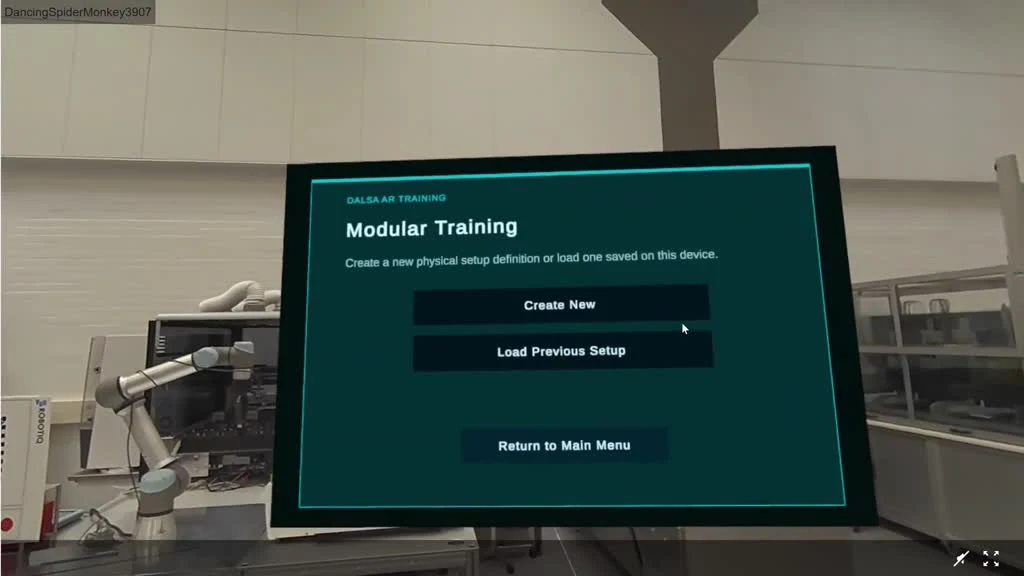
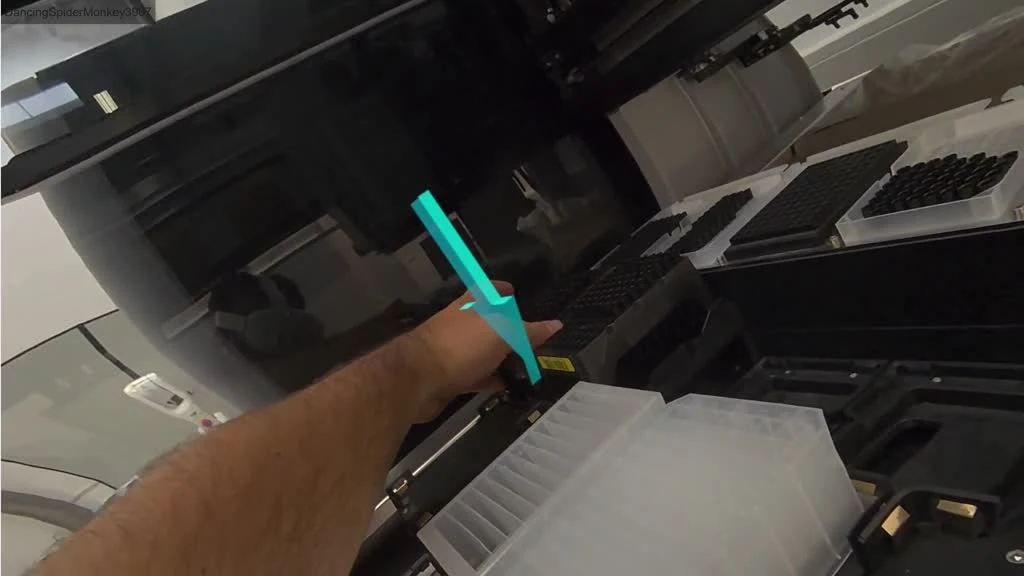
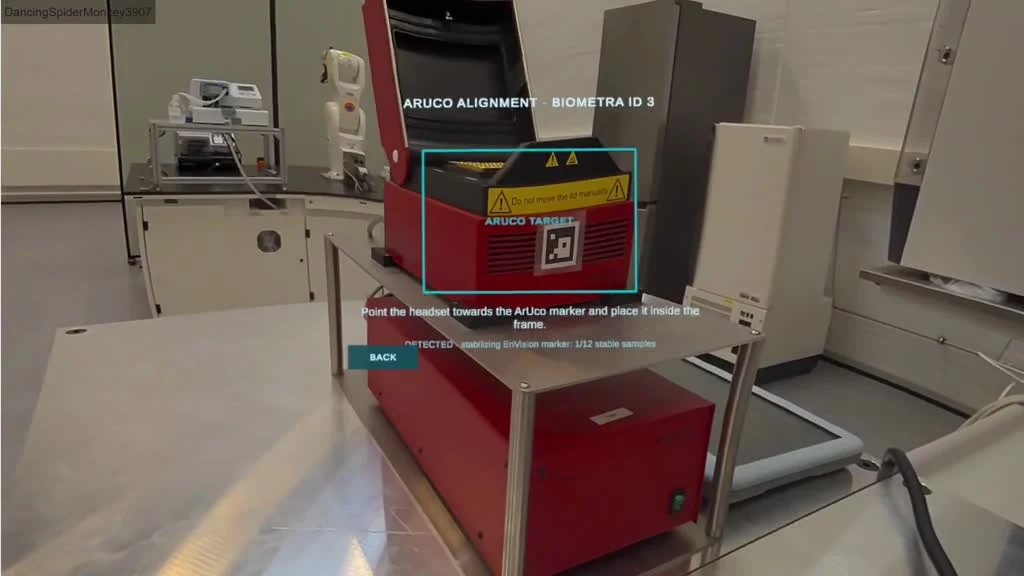
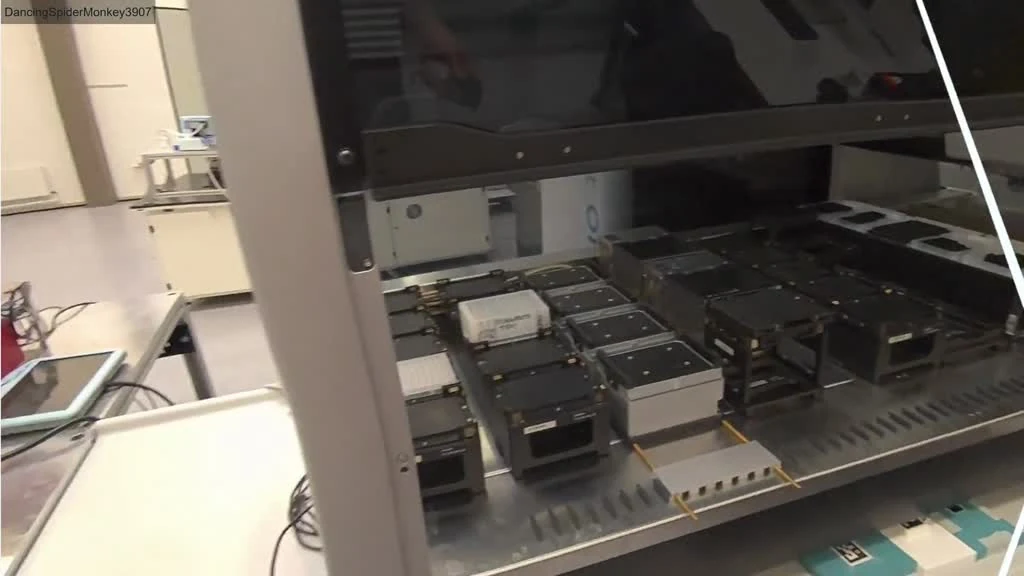
I visited the laboratory at least weekly during the approximately 12-week project, worked through existing equipment procedures and discussed needs with laboratory staff.
Input came from an intelligent systems specialist, a laboratory technician, an automation specialist and a laboratory manager. These were informal contextual discussions, supported by observations and development notes.
The intended users were people unfamiliar with a specific workflow, setup or piece of equipment — including experienced laboratory staff encountering something new.
This was contextual exploration, not a formal interview study with coded qualitative analysis.
What I observed
What the design needed
Preparation happens around real equipment.
Keep the physical lab visible and connect guidance to the task location.
Equipment combinations can change.
Separate reusable preparation content from interface logic.
Users move and look around while working.
Offer a floating tablet with Follow, Pin and local repositioning.
Hands may be occupied with materials.
Explore hands-free confirmation, then check its reliability on the headset.
These observations informed 15 requirements covering passthrough, equipment combinations, alignment, readable instructions, spatial guidance, input methods and the guidance-only scope.